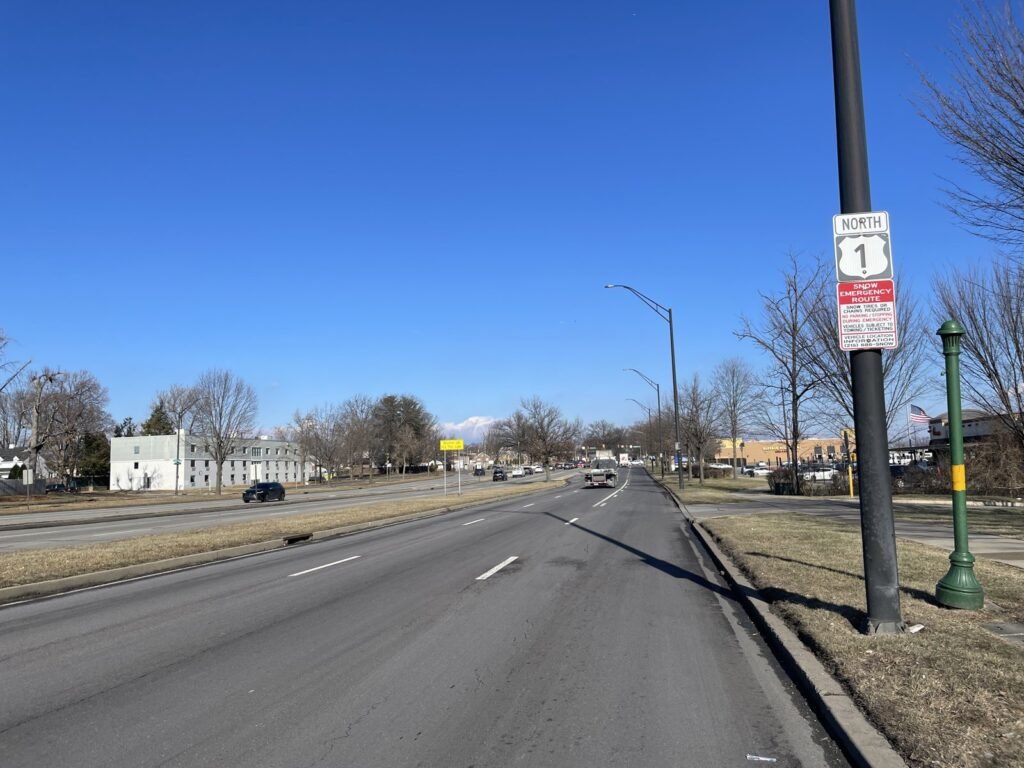
Roosevelt Boulevard northbound past Grant Avenue in Northeast Philadelphia.
City data says Broad Street took that grim title after 2020, while the Boulevard’s long, funded rebuild is only getting started.
For a generation of Northeast Philly drivers, the question almost answered itself. You learned the Boulevard the way you learned weather, which lanes merged, which crossovers trapped you, and how long a walk across twelve lanes could feel when traffic was coming fast from both directions.
That reputation was earned in the numbers. Between 2013 and 2017, Roosevelt Boulevard was the site of 14 percent of all fatal crashes in Philadelphia, according to the City, with Black and brown communities disproportionately impacted. One out of three people in Philadelphia live within a mile of the Boulevard, so the danger was never abstract. It was the road to school, to work, to the bus, and to the store across the street.
Latanya Byrd, Co-Founder of Families for Safe Streets, put the human cost plainly when the City released its Route for Change report in 2021. “My family lost four in one crash on Roosevelt Boulevard and believe me, you don’t want to ever lose anyone to a violent crash like that,” said Byrd.
So is it still the deadliest road in the city? On the latest official evidence, no, and that change is the story.
The City now talks about the Boulevard’s old ranking in the past tense. In a September 2025 release announcing speed cameras on Broad Street, the City said, prior to 2020, Roosevelt Boulevard was the most dangerous road in the city. A joint analysis by PennDOT and the City found that Broad Street, Route 611, had the highest rate of speeding-related crashes and fatalities in the city, with 206 fatal and serious injury crashes from 2020 to 2024.
Reporting on the Vision Zero annual report in 2024 reached the same conclusion. Broad Street had surpassed Roosevelt Boulevard, with over one fatality per month on Broad Street that year. The City Vision Zero Action Plan for 2025 to 2030 says Broad Street had more fatal and serious injury crashes than any other corridor in the city in the last five years.
What changed on the Boulevard was, in large part, speed. Automated speed enforcement cameras went live there in June 2020 under a state-authorized pilot. The City, citing the 2023 Vision Zero Annual Report, reports 95 percent fewer speeding violations, 21 percent fewer fatal and serious injury crashes, and 50 percent fewer crashes involving people walking since the cameras were put in place.
Researchers at the University of Pennsylvania found the cameras saved just under one life per month, the City said in February 2024, concluding that 36 lives had been saved since the cameras went live. Reporting on the later 2024 report put the estimate higher, at more than 50 lives. The exact total depends on the report year, but the direction the City is pointing to is consistent: slower speeds, fewer people hit, and fewer of the worst crashes.
The cameras are not a pilot anymore. Governor Josh Shapiro signed House Bill 1284 on December 15, 2023, and the City says the law made the Roosevelt Boulevard program permanent and allowed expansion to five additional corridors. Broad Street cameras followed, going live in September 2025. In other words, the Boulevard became the test case, and the city is now copying the test onto the road that replaced it at the top of the list.
None of that means the Boulevard is safe now, or finished. Since 2016, City data cited in a federal funding announcement counted at least 75 people killed and 119 seriously injured in crashes along the Boulevard, with 41 percent of those killed being pedestrians trying to cross its twelve lanes. Roosevelt Boulevard, Broad Street and Route 13 all remain on the High Injury Network, the small share of streets where most of the city’s serious and fatal crashes happen.
That is why the rebuild matters, and why readers should separate the work that is funded from the ideas that are still drawings.
The funded work has a name, Route for Change, and the City says traffic safety and transit improvements are fully funded over the next five years through a mix of federal and state grants. The goals are straightforward: reduce speeding, crashes, and deaths, make walking and biking safer, improve SEPTA service, and plan for bigger changes later.
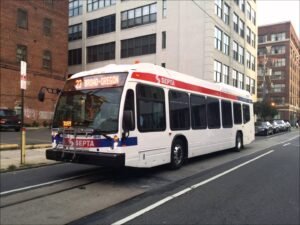
Some pieces are already visible. The City lists speed cameras, intersection work at Summerdale and Adams and at Southampton Road, crossover improvements from Cottman to Red Lion, SEPTA Direct Bus B, and Business Access and Transit lanes from Bustleton to City Line among the work completed or to be completed by 2026. In February 2026, the City said new bus stations were complete on both sides of the Boulevard at Broad Street, Rising Sun Avenue, Tower Center at Langdon Street, and Pratt Street, with shelters, lighting, kiosks, and trees. Expanded limited stop service is set to begin in 2027.
The next construction push is closer to the ground. PennDOT work to improve crossovers at five spots between Cottman Avenue and Red Lion Road, at Revere and Faunce, Strahle, Winchester, Michener, and Fulmer, was set to start with drainage work in winter and full construction in Spring 2026, with longer crossover lanes and upgraded pedestrian crossings, signals, ADA curb ramps, and crosswalks.
PennDOT also announced $10 million for 2025 Roosevelt Boulevard intersection modifications, including curb extensions to shorten crossing distances, realigned crosswalks and lanes, signal and timing upgrades, and new or upgraded transit shelters and stations.
The larger funded project is still ahead. The City describes a 12-mile, $78 million traffic safety and transit project from Broad Street to Old Lincoln Highway in Bensalem, federally funded with state speed camera grant support, with public meetings planned for the first half of 2026 and construction beginning in 2028. Its menu includes pedestrian islands and signals, sidewalks, crosswalks and curb extensions, bike lanes, traffic signals, lane changes, and bus only lanes and stop improvements.
Then there is the part that is not funded construction, however exciting it sounds at a public meeting. The Boulevard Reimagined is a study for after 2040. The City lists two road options under consideration: a partially capped expressway with sunken lanes, and a neighborhood boulevard with slower inner and outer lanes. Possible transit services listed are bus rapid transit, light rail transit, and subway. No option in that list should be read as chosen, priced for construction, or promised. It is the long-term question the City says it is still studying.
That distinction is the honest answer to the headline. Roosevelt Boulevard is no longer, on the City’s own latest evidence, the single deadliest road in Philadelphia. Broad Street is the corridor the City and PennDOT now rank highest for speeding-related crashes and fatalities. The Boulevard is something slightly different, and in some ways more useful to understand; it is the proof that a deadly road can get less deadly when speeds fall, and the test of whether Philadelphia can do the slower, more expensive work of rebuilding a road so it stays safer after the cameras have done their part.