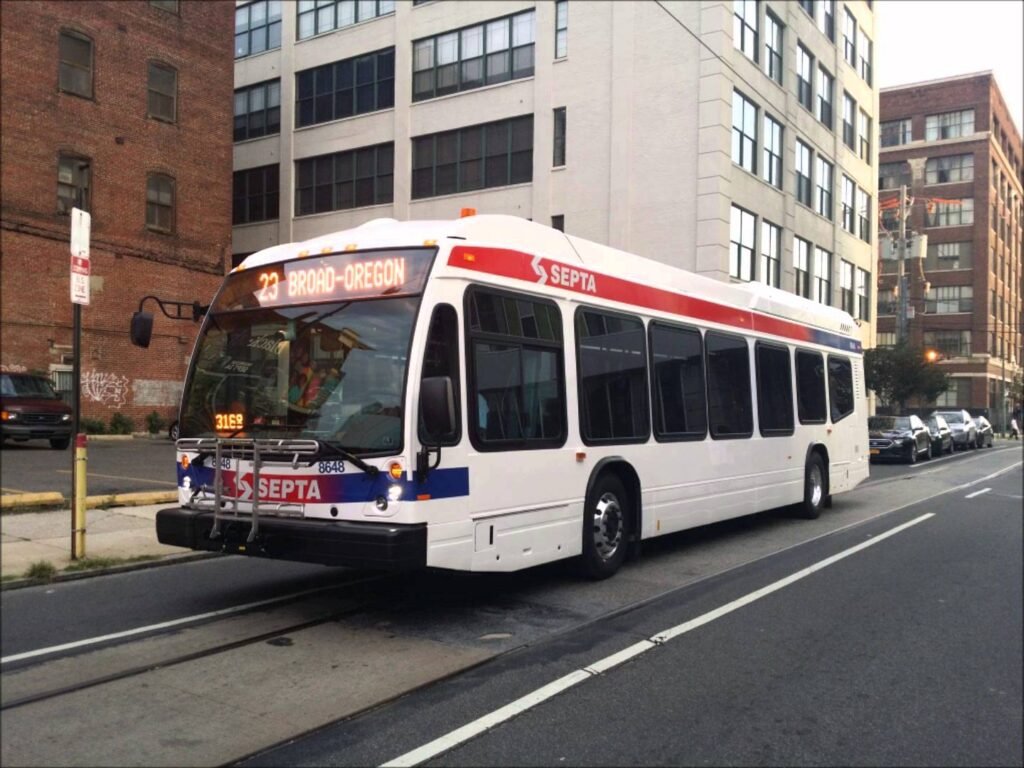
A SEPTA bus in Philadelphia. SEPTA's New Bus Network began rolling out in August 2026. Credit: Photo by Yesums, via Wikimedia Commons, CC BY-SA 4.0
Phase 1 started in August from Frankford, with new Routes 72 and 76, a shorter Route 25, and more changes promised for 2027 that SEPTA has not finished detailing.
If you ride from Frankford, your bus map already looks different, and SEPTA is clear that more change is still coming.
The change has a new name. What riders first heard about as Bus Revolution is now SEPTA’s New Bus Network, and SEPTA describes it as the first-ever comprehensive redesign of its bus network in its 63-year history. That scale is the point. SEPTA says how people travel has changed, and the network is being rebuilt around today’s travel patterns, putting buses where riders need them most, with simpler routes, better signage, and stronger connections to other routes and transit services.
The plan was approved by the SEPTA Board in May 2024, after what SEPTA calls the largest community engagement effort in its history, with 150 in-person events, 40 virtual meetings and 10 public hearings over three years, and feedback from more than 20,000 residents. The goal, SEPTA says, is a network that is easier to use, more efficient, and more reliable, with reduced wait times.
“New Bus Network is a key piece of SEPTA’s commitment to make the transit system more reliable for our existing customers, and more useful to more people so we can attract new customers,” said SEPTA General Manager Scott A. Sauer, in SEPTA’s March 11, 2026 announcement.
When fully implemented, SEPTA says, the number of routes offering frequent service, defined as a trip every 15 minutes or better seven days a week, would increase from eight to 29. Phase 1 adds midday and weekend service to ten routes as a foundation. In its Phase 1 guide, SEPTA says the New Bus Network is not a service cut, and separates it from the August 2025 reductions, which it says happened because funding to fully operate all services was not received. It also says fare increases are not connected to the bus changes.
Phase 1 is already here. SEPTA’s initiative page, updated in August 2026, says it has introduced two new routes and six extensions, and that seven existing routes are eliminated. The first three phases make up the Fiscal Year 2027 Annual Service Plan, presented at the April 2026 open house and hearing and approved on May 28, 2026. Phase 1 began August 23 and 24, 2026.
For the Northeast, the headline act is Route 72. The new route runs from Frankford Transit Center to Cedarbrook Plaza via Pratt Street, Roosevelt Boulevard, Adams Avenue, Crescentville Road, and Cheltenham Avenue, every 30 minutes. SEPTA calls it an east-west crosstown on Cheltenham Avenue and says it creates a new connection on Cheltenham Avenue. If you have ever tried to go sideways across the top of the city instead of into Center City and back out, this is SEPTA trying to fix that trip.
Route 76 is the other new line, and it cuts north to south through neighborhoods that touch the Northeast. SEPTA’s Phase 1 guide says it operates from Columbus Commons to Rising Sun Avenue and Olney Avenue via Columbus Boulevard, Frankford Avenue, G Street, Whitaker Avenue and Adams Avenue, every 30 minutes, creating a new connection between North Philadelphia and South Philadelphia and replacing discontinued segments of Route 25. SEPTA’s initiative page lists a slightly different set of streets for Route 76, so riders should check the official trip planner for their exact stop rather than rely on a summary. The direction, though, is consistent across SEPTA’s material: Crescentville and the Frankford Avenue corridor now have a through route toward Fishtown and Center City via Columbus Boulevard.
Route 25, a Frankford staple, is shorter and, SEPTA says, more frequent. It now operates between Frankford Transit Center and Spring Garden Station, and service to Pier 70 and Columbus Commons is discontinued on Route 25 but served by new Route 76. Weekday frequency improves from every 20 to 30 minutes to every 15 minutes from 6 a.m. to 9 p.m., and weekend service improves from every 30 minutes to every 20 minutes. Route 25 also becomes an OWL route, operating 24 hours a day in place of Route 73, with OWL service every 60 minutes, and its routing shifts from Memphis and Cedar Streets to York Street and Frankford Avenue in Fishtown and Olde Richmond.
That OWL swap has a cost on Route 73, which runs from Frankford Transit Center to Richmond Westmoreland. Weekday frequency is reduced from every 20 to 25 minutes to every 30 minutes in the periods SEPTA lists; Route 73 is removed from the OWL network, and its service day is set from 4 a.m. to midnight on weekdays, 5 a.m. to midnight on Saturdays, and 6 a.m. to midnight on Sundays.
Two Northeast-facing routes disappear in Phase 1. Route 89, from Front Dauphin to Arrott Transit Center, is discontinued. SEPTA calls it duplicative and points riders to Routes 3, 5, 25, 39, 41, 43, 53, 56, 75, 76, K and the Market Frankford Line. Route 78, the express from Cornwells Heights to Center City, is also discontinued. SEPTA cites low ridership, notes that it provided two late-night trips, and lists no alternative service for it in its guide. Systemwide, Phase 1 also eliminates Routes 35, 47M, 62, 80 and 106, with 106 combined into Route 105.
Around the Northeast edge, Route 57 changes in Crescentville to run via Front Street and Godfrey Avenue to Fern Rock Transit Center, with routing on Champlost Avenue, Crescentville Road, Cheltenham Avenue, Wingohocking Street and 2nd Street discontinued. SEPTA says Route K and new Route 72 provide service in East Oak Lane and Crescentville. Route 53 is extended to the Richmond and Westmoreland Loop, creating connections with Routes 60, 73, and G and serving segments previously served by Route 89. Route 54 gets a mixed adjustment, with 15-minute peak service, slightly less frequent midday service, and late evening service improving from every 45 minutes to every 30 minutes.
What comes next matters just as much for Frankford riders, and it is less finished. Phase 2 is set for February 2027 and Phase 3 for June 2027, as months only, with no exact start days given in the SEPTA material reviewed. Phase 2 includes expansion of Direct Bus service from Frankford Transit Center to Wissahickon Transit Center, alignment changes to Routes 3, 5, 22, 33, 51 and 94, the first SEPTA Go on demand zones in Paoli and West Chester, new Route 142 in Chester County, and elimination of Routes 1, 30, 92, 150, 201, 204 and 206. Phase 3 includes SEPTA Go service in Norristown and alignment changes to Routes 95, 97, 98, 99 and 131.
Beyond that, SEPTA is explicit that the story is NOT finalized. The first three phases, it says, only get the network part of the way there. Additional changes will be part of the Fiscal Year 2028 Annual Service Plan, to be presented in Spring of 2027, and SEPTA labels that section “Details of future phases to be determined”. Until SEPTA publishes route-by-route guides for Phases 2 and 3, Northeast riders should treat those summaries as highlights, not schedules, and use SEPTA’s Phase 1 Trip Planner to check any current trip.