

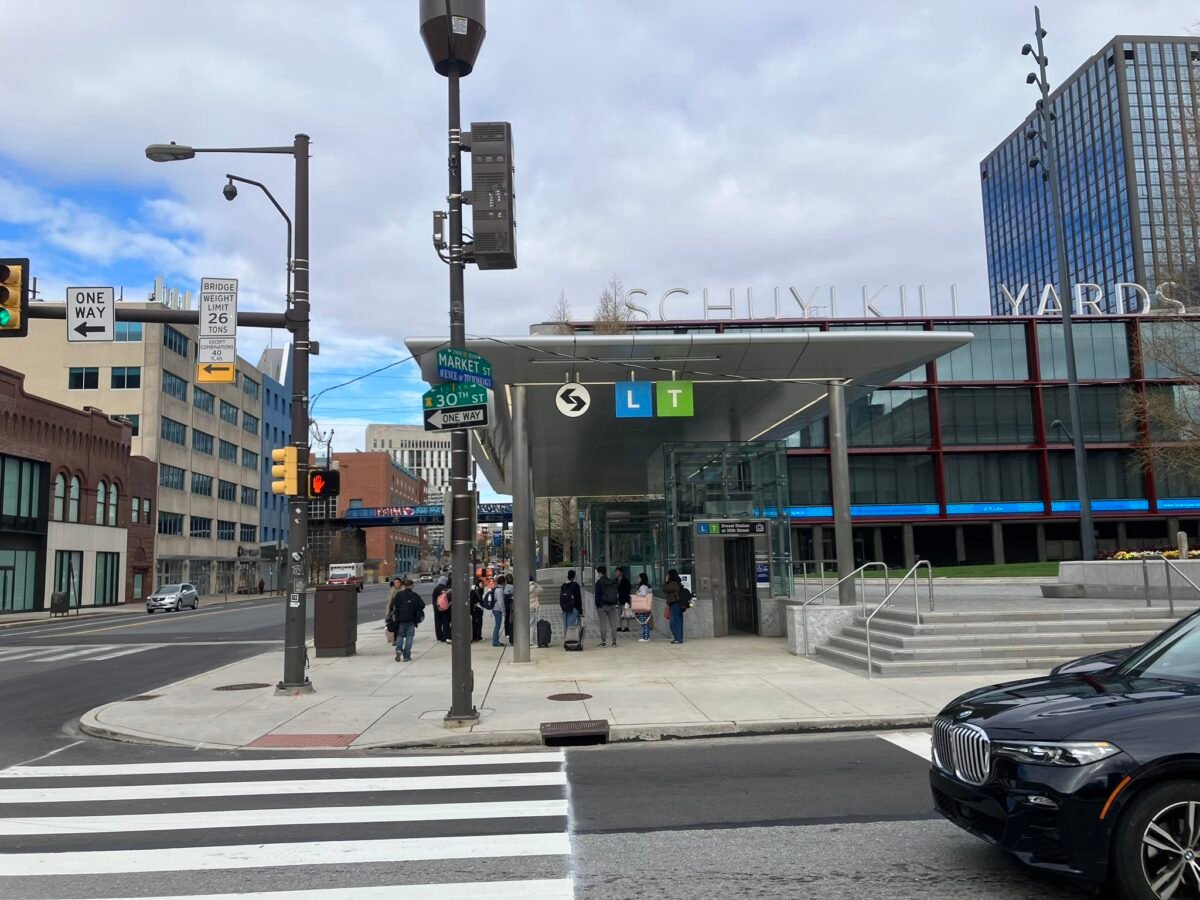
SEPTA launched a new outreach program Tuesday, and riders will start seeing its teams in purple vests at stations across the system.
The program is called Reach. Under a one-year agreement with Citizens Acting Together Can Help, Inc., a South Philadelphia nonprofit known as CATCH, social outreach specialists are being deployed at SEPTA stations to assist people experiencing homelessness, addiction, and mental illness. Reach is a division of SEPTA Transit Police, and the specialists work closely with police officers.
The teams patrol stations and SEPTA vehicles, engage people who have taken refuge on the system, and connect them to housing, healthcare, mental health services, recovery support, veterans resources, and other community help. They also offer transportation to service providers. Staff will work weekdays over the next year, focusing on hotspots where riders and data show the need is greatest. The specialists will have access to safety reports submitted by riders through the SEPTA app and customer service center.
For Northeast Philadelphia riders, the change will show up on the lines they use every day. The Market-Frankford Line, Regional Rail, and SEPTA buses all run through the Northeast, and Reach covers stations and vehicles across the system. SEPTA has not named which stations the teams will start at, so Northeast riders will have to watch for the purple vests at their own stops.
The program pairs help with enforcement, and SEPTA is not hiding that. People who decline assistance will be asked to leave the system, and specialists can call on police if a situation escalates. Transit Police Chief Charles Lawson called the program a critical component of the department’s enforcement approach, saying the specialists will serve as a force multiplier and address hotspots based on data and reports from customers.
That framing matters, because the question hanging over Reach is what success looks like. If the specialists connect people to housing and treatment that actually lasts, the program is doing something policing alone never could. If it mostly moves people from one station to another, it is enforcement with a friendlier face. SEPTA’s own announcement leans toward the first version, and riders and advocates will be watching to see which one shows up in practice.
“By helping connect vulnerable individuals to services and support, SEPTA is working to build a safer, more welcoming environment for everyone who relies on our system,” General Manager Scott A. Sauer said in the announcement. He pointed to partnerships with government agencies, nonprofits, healthcare providers, and the community, and said the agency is addressing the challenges compassionately while keeping its core job of providing safe and reliable transportation.
Lawson put it more bluntly: “This program will be a critical component of our enforcement approach to address issues related to the vulnerable community and reduce quality-of-life complaints. The outreach specialists will serve as a force multiplier and address hotspots based on data and reports received directly from our customers.”
Riders can report safety concerns and quality of life issues anonymously through the SEPTA app or by calling Transit Police at (215) 580-8111. SEPTA is also encouraging community groups to reach out and collaborate with the program.
The agreement runs one year. What happens after that will depend on what the teams deliver in the meantime, and whether the people they meet end up housed and cared for, or just somewhere else.